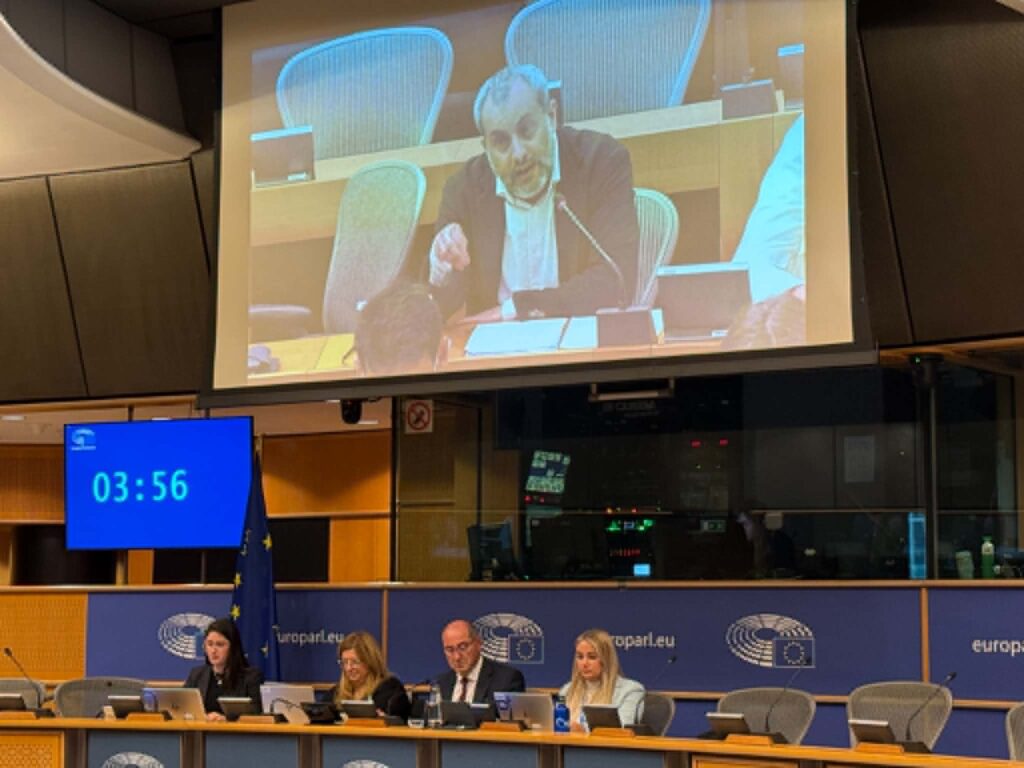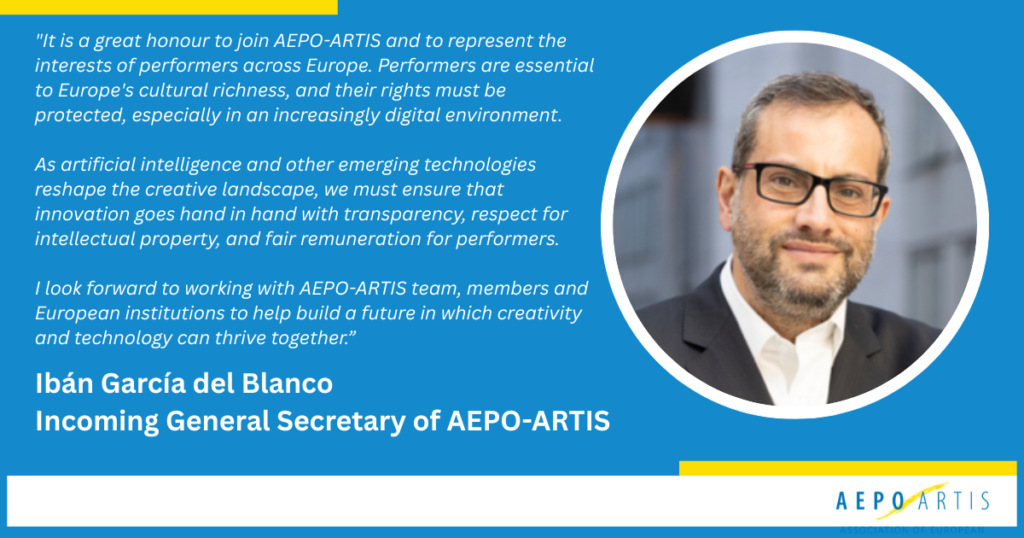

On April 27 and 28, AEPO-ARTIS participated in Tokyo in a conference on AI and IP, organised within the framework of the EU-Japan IP Action project.
The IPA project focusses on enhancing cooperation between Japan and the EU in the field of Intellectual Property, particularly in the digital space. Instigated by the EUIPO, the initiative aims to align IP policies and practices between the EU and Japan. The IPA started officially in October 2025 and will run for 48 months. The conference organised in Tokyo was a first step in bringing the focus of the IPA to the relationship between intellectual property and AI.
The conference took a particularly broad approach and touched upon the use of AI in trademark protection, ongoing lawsuits in both the EU and Japan, as well as the discussions known to us regarding the impact of generative AI on the creative sectors and the manner in which both regions are responding to this. A particularly interesting angle here, for example, was the possibility for performers in Japan to register their voice and likeness as a trademark in an attempt to combat unauthorised digital replicas.
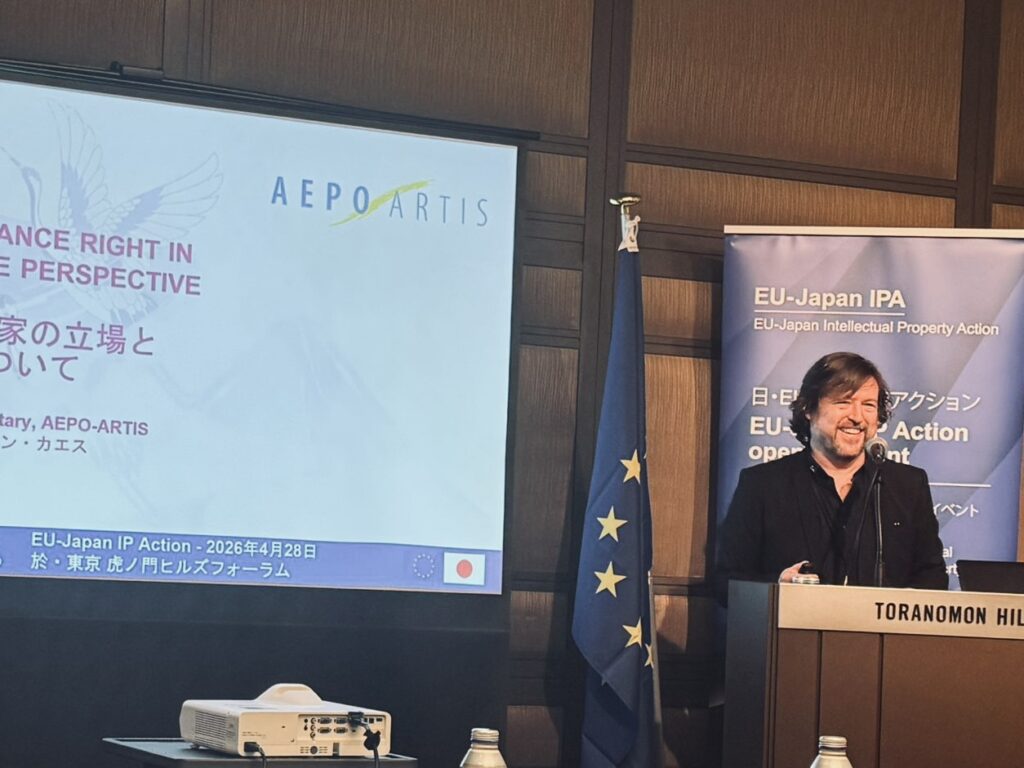
The EU framework, consisting of the CDSM Directive, the AI Act and its implementation package of Code of Practice, Transparency Template and GPAI Guidelines, was presented as providing a proper basis for a balanced practice. In a panel focussing on the audiovisual sector, AEPO-ARTIS was able us to point out that the current EU framework, is far from satisfactory for our actors and that additional measures are needed to guarantee that performers’ rights are respected and that they can obtain remuneration when their work is used for AI purposes.
In a separate panel on the music industry, we confronted representatives of IFPI and the French producers’ CMO SCPP, with the need to develop new remuneration schemes that would avoid repeating the unfair practices existing in the streaming industry. Rather than working together on a search for better and more transparent systems, SCPP went on the offensive by stating that the streaming model was exemplary because performers are by far receiving the largest part of income generated by this mode of exploitation. This gave rise to a very lively discussion in which we were able to demonstrate how the most recent IFPI annual report – on which the panellists based their arguments – misrepresents the figures regarding payments to performers.
As a general conclusion, we can state that the conference has given the Japanese government a clear picture that, regarding AI, there are no lessons to be learned from the European adventure.
In addition to the conference we participated in a workshop on Public Performance Rights. This workshop was organised at the request of the Japanese Copyright Office (JPO) that has drafted a proposal to introduce the right for performers and producers to collect for the public performance of phonograms, a proposal which is currently being submitted to the Diet (Japanese Parliament).
The proposal is the result of pressure from the EU within the EU-Japan Economic Partnership Agreement (EPA) signed in 2019, which includes specific commitments in the field of intellectual property. The workshop focussed on providing the Japanese Copyright Office with a clear view on the practice of the collection of remuneration for the public performance of music by authors, producers and performers. AEPO-ARTIS was able to partially remove the persistent reluctance regarding the right of performers to receive remuneration for this type of exploitation, by highlighting the importance of the collection for our performers’ income and providing insight into the long history that preceded this irreversible practice.
We thank the EUIPO for including AEPO-ARTIS in the EU’s delegation to this important mission and hope that this will soon unlock new revenues for our European performers.