
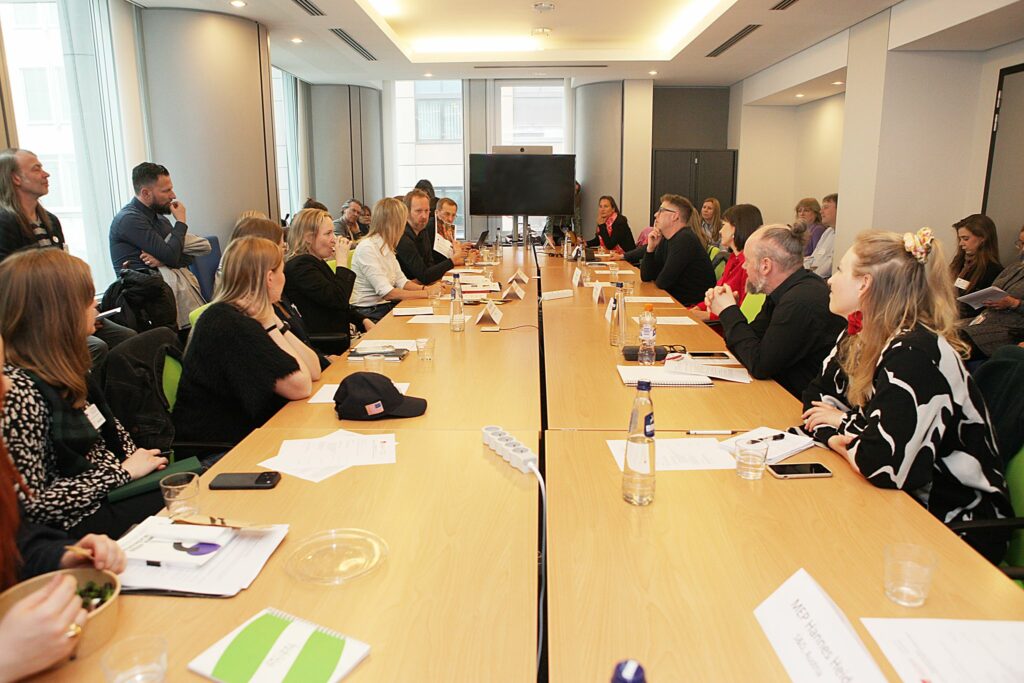
On 6 May, AEPO-ARTIS – together with Finnish MEP Maria Guzenina – organised a discussion on Copyright and AI between MEPs and performers. In a short timeframe—during which we tested the maximum capacity of the room—we provided a forum for multiple MEPs, musicians, and government representatives.
Under the title “Generative AI vs Music: Safeguarding Human Creativity and the Respect of Intellectual Property” we provided musicians a first opportunity to speak at the heart of European democracy as performers.
Croatian pop-artist Mia Dimsic started the debate with the statement that she did not feel threatened by AI, but certainly uncomfortable, while making clear how AI bypasses the actual creation process. “If we would no longer make music because we like the slowness of the process of it, then why are we here?” She was supported in this by the Belgian musician Pascal Oorts, who noted that AI not only competes with human music through its output, but is also increasingly taking a place in the actual production process. In doing so, it erodes trust in the collaborative process that we know and introduces rivalry into the actual creation process.
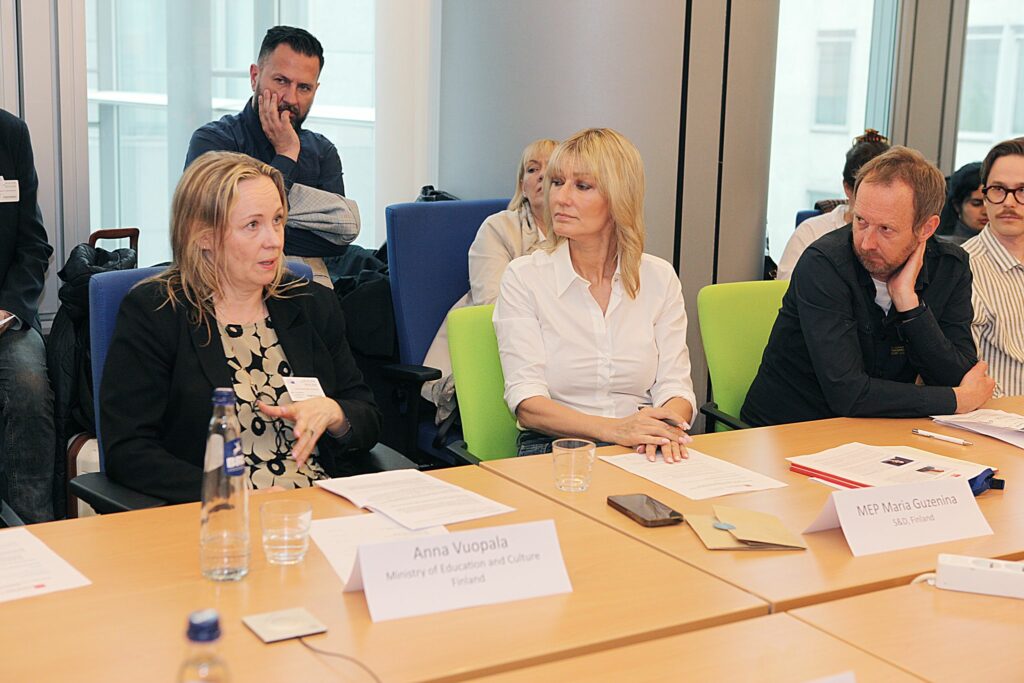
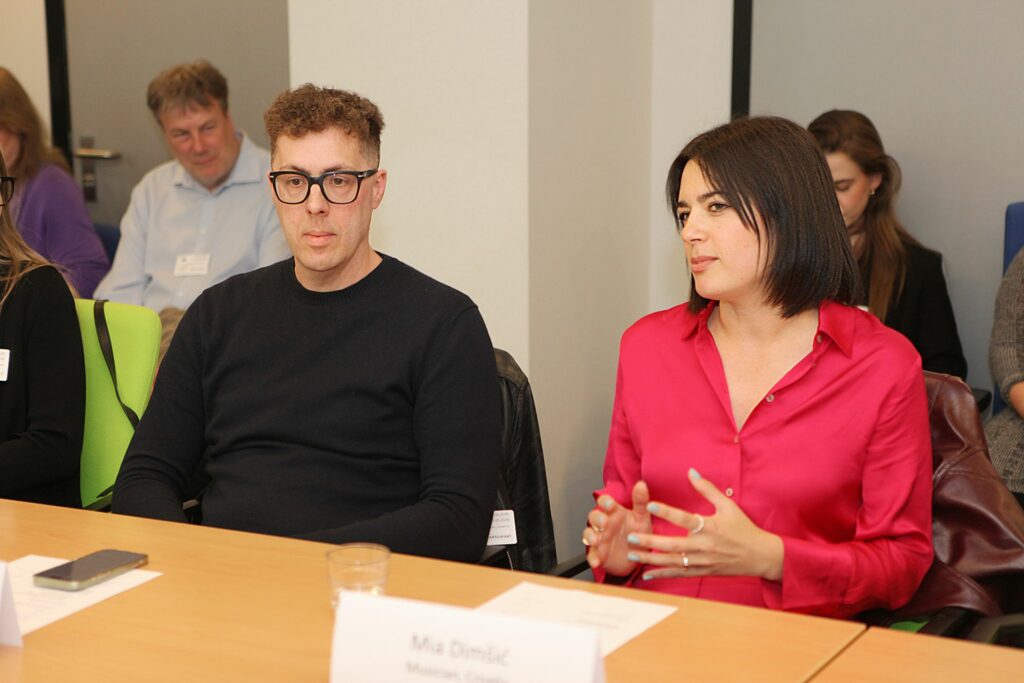
Our own Nick Yule participated in the debate and put focus on the fact that musicians have actually never signed up for this. While record companies have already begun licensing performers’ recordings, the need for prior authorisation is not something they have paid any attention to. Anne Vuopala, Senior Advisor to the Finnish Ministry of Culture and coordinator of the EU Copyright Infrastructure Task Force, joined with him in this and delved deeper into the need for a proper infrastructure to enable artists to effectively enforce the rights they acquire by law. “We need better tools to identify the human creator and ensure they are kept in the value chain”.
There was a consensus among the panellists that the current framework of the AI Act and codes of practice offer insufficient guarantees to ensure the principles of authorisation, transparency, and remuneration. There was also an acknowledgment that the use that is already widespread has a particularly significant impact on the bargaining position of musicians. In the current context, only major labels appear to have sufficient clout to initiate negotiations with AI providers. However, giving these companies the power to determine the terms for an entire sector carries the risk of a repeat of the streaming debacle.
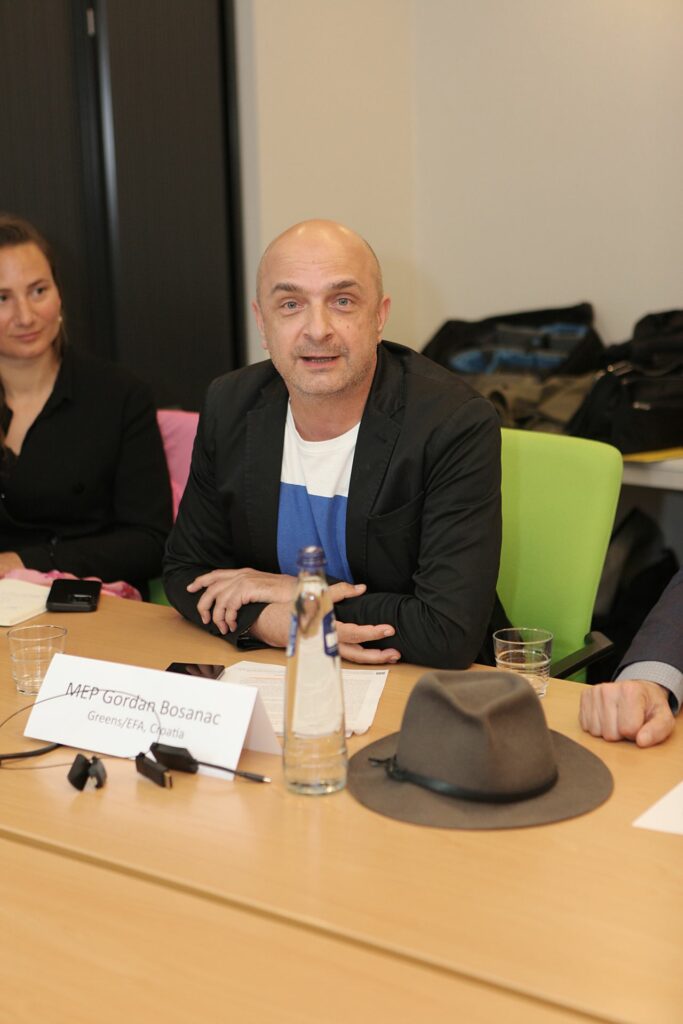
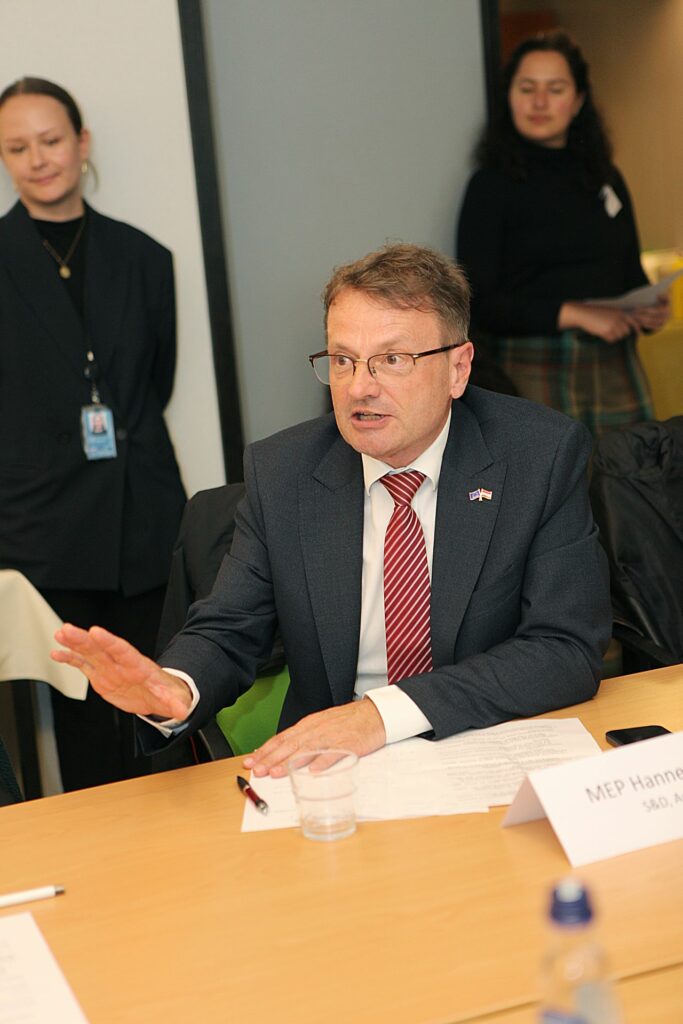
In a round of reflections, MEP Hannes Heide (Austria) kicked off with the statement that “Being against AI theft is not the same as being against innovation” and that we should certainly expect a bit more from big tech. “Transparency is not a competence that AI providers lack.” While Hannes called on musicians to occupy Place Luxembourg with tour buses, just as farmers do with tractors, MEP Gordan Božanac (Croatia) went a step further. He referred to the enormous role assigned to AI in strengthening the defence sector and called for it to be used to defend our artists against piracy, which is also amplified by AI.
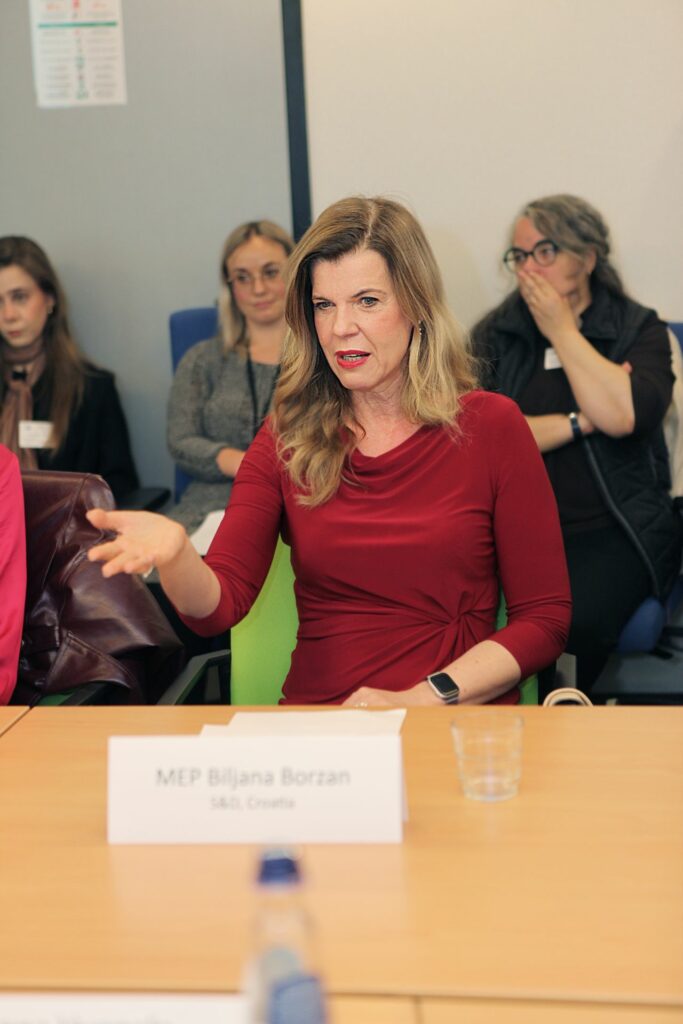
MEP Biljana Borzan (Croatia) took a slightly more moderate position by pointing out the inevitability that some jobs would indeed be lost and that we could not make everyone happy. In his concluding remarks, our former General Secretary Ioan Kaes alluded to this by stating that while we indeed cannot make everyone happy, for once we do want a situation where it is the artist who is ultimately happy. “AI is there to help us try not to make mistakes. Culture is there to help us accept that we do.”
The event ended on a poetic note, with Maria Guzenina and Nick Yule reciting some lyrics by the French metal band Gojira, with the line “Seems all have gone insane for gold” being particularly relevant for some involved in the development of GenAI.