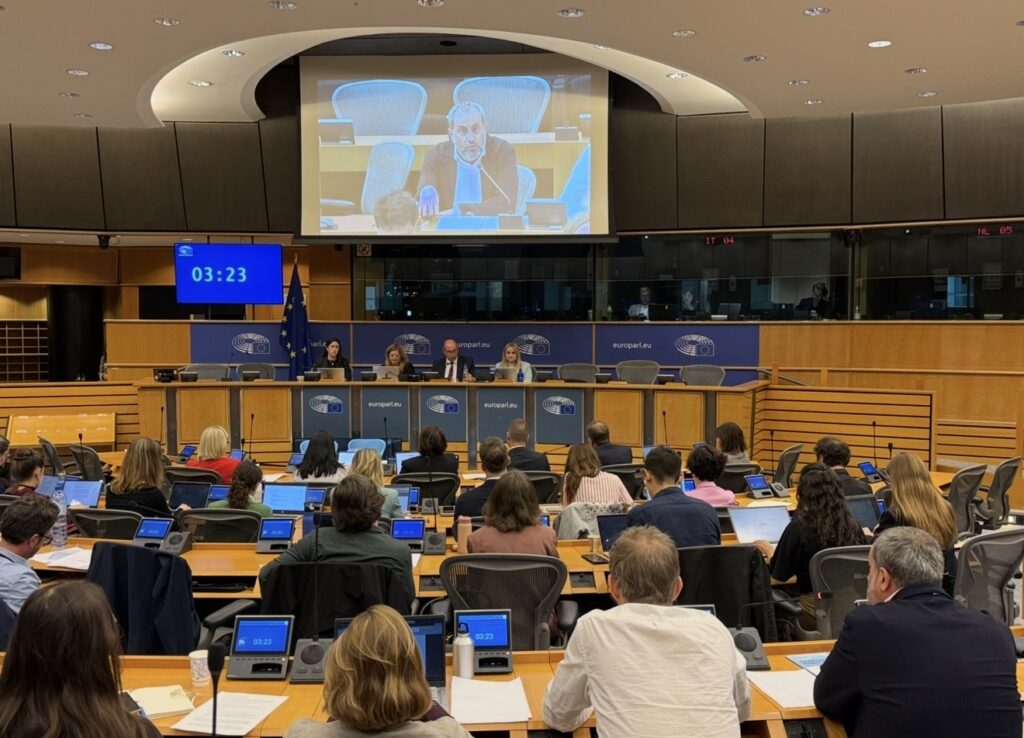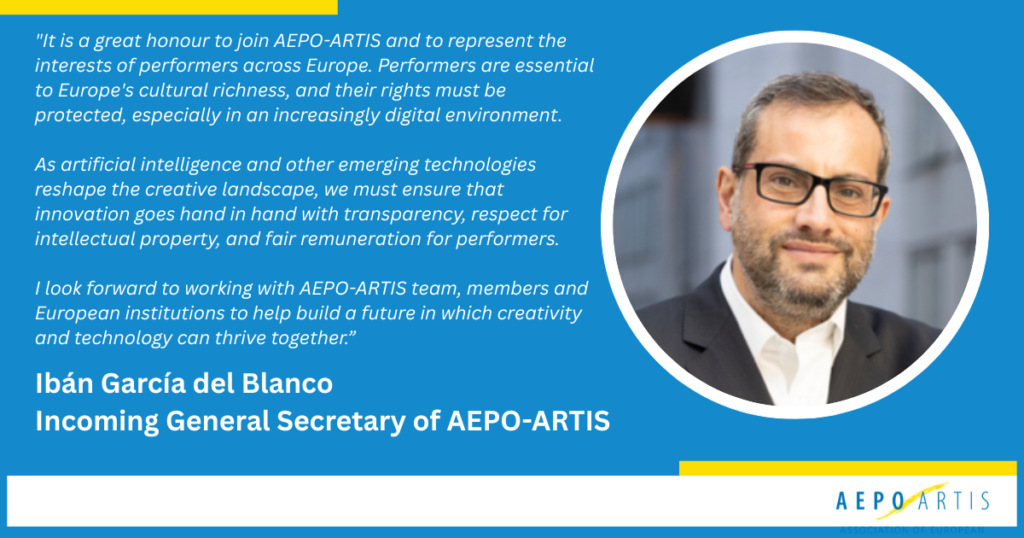

Ibán García del Blanco, General Secretary of AEPO-ARTIS and former Member of the European Parliament, returned on Wednesday, 2 September, to the European Parliament to participate in a stakeholder dialogue organised by MEP Hélder Sousa Silva, Rapporteur for the Own-Initiative Report on Cultural and Creative Sectors in the Age of AI (2025/2180(INI)). In his intervention, García del Blanco called for performers’ rights to be placed at the heart of Europe’s approach to artificial intelligence.
Speaking to stakeholders and policymakers, García del Blanco drew on his experience as a former Member of the European Parliament and rapporteur of the Parliament’s own-initiative report on “Cultural diversity and the conditions for authors in the European music streaming market” (2023/2054(INI)). The report, adopted by Parliament in January 2024, examined the challenges created by the music streaming market and called for a fairer and more sustainable ecosystem for creators and performers.
.
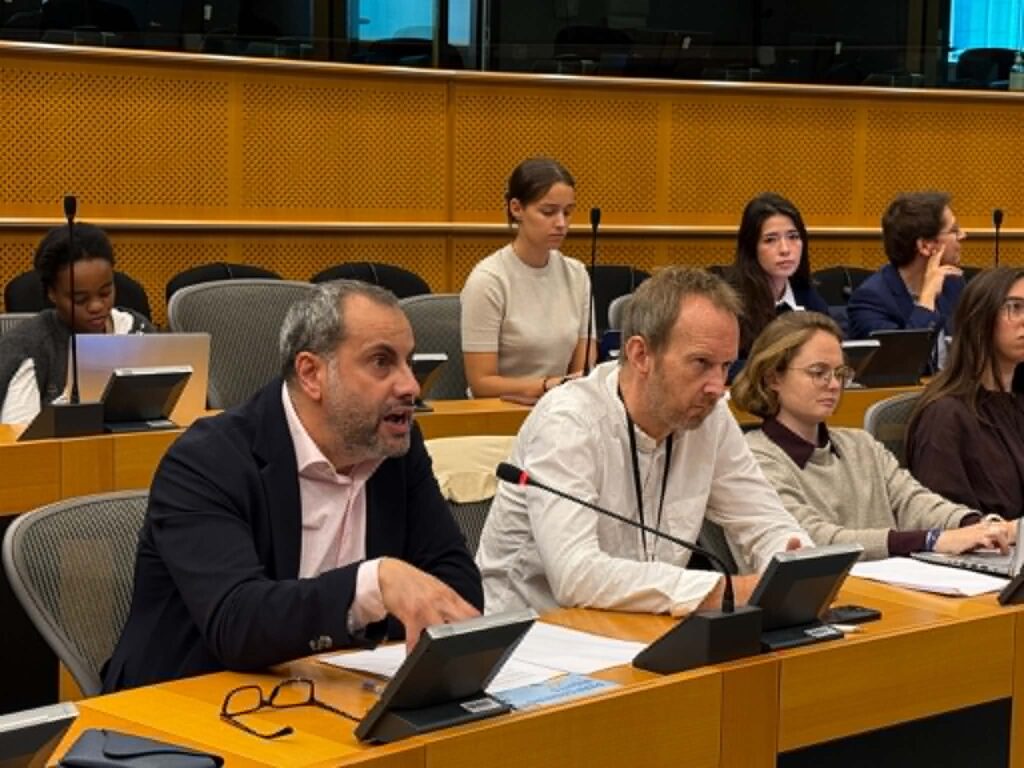
His intervention highlighted a key lesson from the streaming revolution: once an unfair business model becomes established, it is extremely difficult to change.
“AI offers enormous opportunities for Europe’s cultural and creative sectors, but we cannot repeat the mistakes of streaming,” García del Blanco said. “Performers must not be left behind as new technologies create new markets and new sources of value. We must always make ART (Accountability, Revenue, and Transparency) our guiding principles.”
From streaming to AI: lessons for a new market
During his intervention, García del Blanco stressed that the development of AI is once again transforming the way music, film and television are created, distributed and consumed.
While AI can bring significant opportunities for creators and European culture, he argued that the lessons of the streaming market should inform the development of the AI ecosystem from the outset.
His 2023 report on music streaming highlighted the significant imbalances in the digital music market, including the very low revenues received by many artists and the concentration of revenues among major players and the most popular artists. European Parliament subsequently called for measures to support fair remuneration, transparency and cultural diversity in the streaming market.
“Being remunerated by AI companies is only one part of the equation,” García del Blanco said. “We must also make sure that the revenues generated from the use of cultural and creative content are fairly shared with the people whose work creates that value.”
.
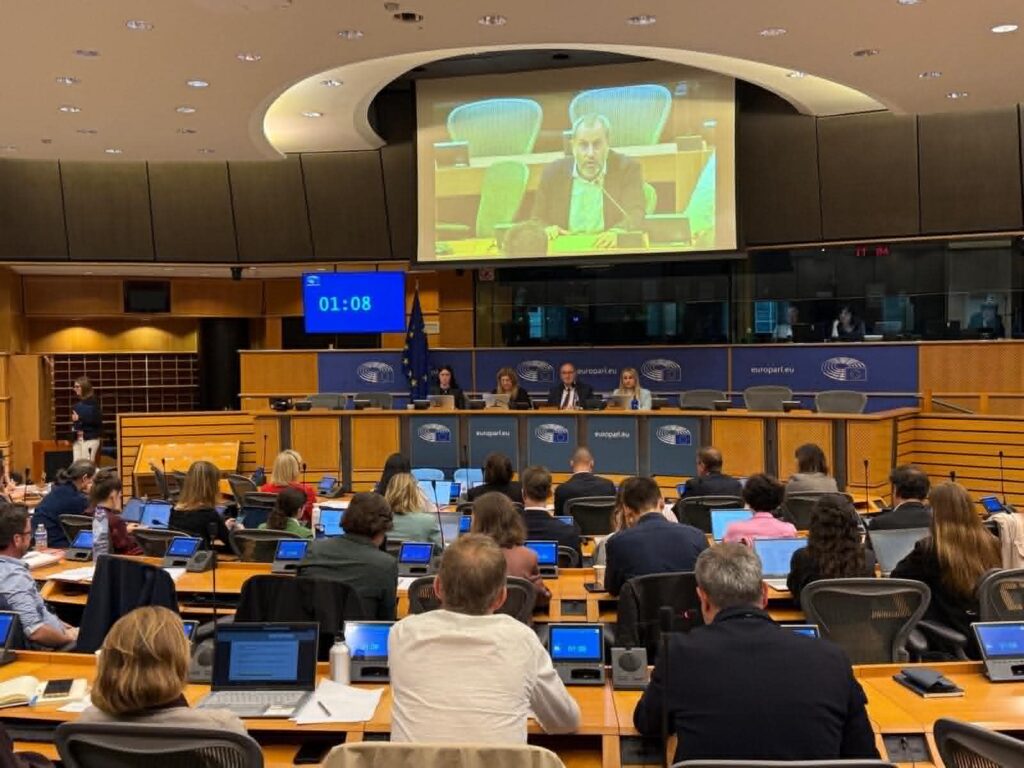
Performers must not be left out again
García del Blanco emphasised that particular attention must be paid to performers, including session musicians and actors who have historically received little or no benefit from streaming revenues.
He called for a licensing environment based on demonstrable authorisation and responsible, transparent contracts where performers’ rights are fully respected.
He also stressed the importance of ensuring that all performers can benefit from the value created by AI, including those who do not have traditional royalty-based contracts.
“A key lesson from streaming is that we cannot wait until the market is established to address unfairness,” he said. “If we want AI to strengthen European culture, performers need to have a meaningful share in the value it creates from the beginning.”
Keeping human creativity at the heart of European culture
García del Blanco also underlined that Europe’s AI strategy must look beyond remuneration.
AI should support the people who create Europe’s culture rather than replace them, he argued. The development of AI should also reinforce — rather than undermine — Europe’s cultural and linguistic diversity.
“Europe needs AI, and AI also needs Europe’s creators,” García del Blanco said adding “but more important, Europe needs European creators in order to keep being Europe. Our job is to work together to make sure we have a future together. We have to build and shape the future together to make sure that the future is ours.”
The European Parliament’s work on music streaming provides an important precedent. García del Blanco’s report, for which he served as rapporteur, called for a fair and sustainable European streaming ecosystem that addresses imbalances affecting authors and performers while promoting cultural diversity.
As Europe now considers how copyright, licensing and remuneration frameworks should respond to generative AI, García del Blanco called for policymakers and stakeholders across the cultural and creative sectors to work together to ensure that the mistakes of the streaming era are not repeated.